The benchmark for strength and sealing recovery.
Aperflu 2675 sits at the top of the family on two counts at once: the highest tensile strength (23.1 MPa) and the lowest compression set (6% after 200 °C × 70 h). For static seals that must hold preload through thousands of thermal cycles, that combination is exactly what matters.
At 74 Shore A it is the hardest compound in the range, giving excellent extrusion resistance under high differential pressure. Continuous service is rated to 260 °C, and its comparatively mild cure schedule — 150 °C primary and 250 °C post-cure — also makes it the most energy-efficient grade to process.
Both are FFKM compounds aimed at aggressive chemical service. On the physical properties published by each manufacturer, Aperflu 2675 leads on strength, elongation and compression set, while Kalrez 6375 publishes a higher continuous service temperature (275 °C vs 260 °C).
| Property | Aperflu 2675 | Kalrez 6375 |
|---|---|---|
| Hardness | 74 Shore A | 75 Shore A |
| Tensile strength at break | 23.1 MPa | 15.16 MPa |
| Elongation at break | 180 % | 160 % |
| 100 % modulus | Not published | 9.11 MPa |
| Compression set, 70 h | 6 % @ 200 °C | 24 % @ 204 °C |
| Set test specimen | ASTM Type 1 button | Pellet / O-ring #214 |
| Max. continuous service temp. | 260 °C | 275 °C |
Highlighted cells indicate the more favourable published value.
52% higher tensile strength, 20 points more elongation and a quarter of the compression set (6% vs 24% at comparable 200–204 °C / 70 h conditions).
A published 275 °C continuous service ceiling — 15 °C above Aperflu 2675 — useful when the process runs just beyond what 2675 is rated for.
High-pressure static sealing up to 260 °C: 2675. Continuous service in the 260–275 °C band: 6375. Above 275 °C: step up to Aperflu 3075.
Kalrez® and Spectrum™ are trademarks of DuPont de Nemours, Inc. Values are taken from DuPont published technical information (Rev. 4, July 2019) and from the Aperflu grade data sheet; both are typical values, not specifications. Test specimens and temperatures differ slightly between the two datasets — always confirm selection with immersion testing in the actual process fluid.

Hardness and tensile strength resist extrusion in flange and housing glands under large pressure differentials.
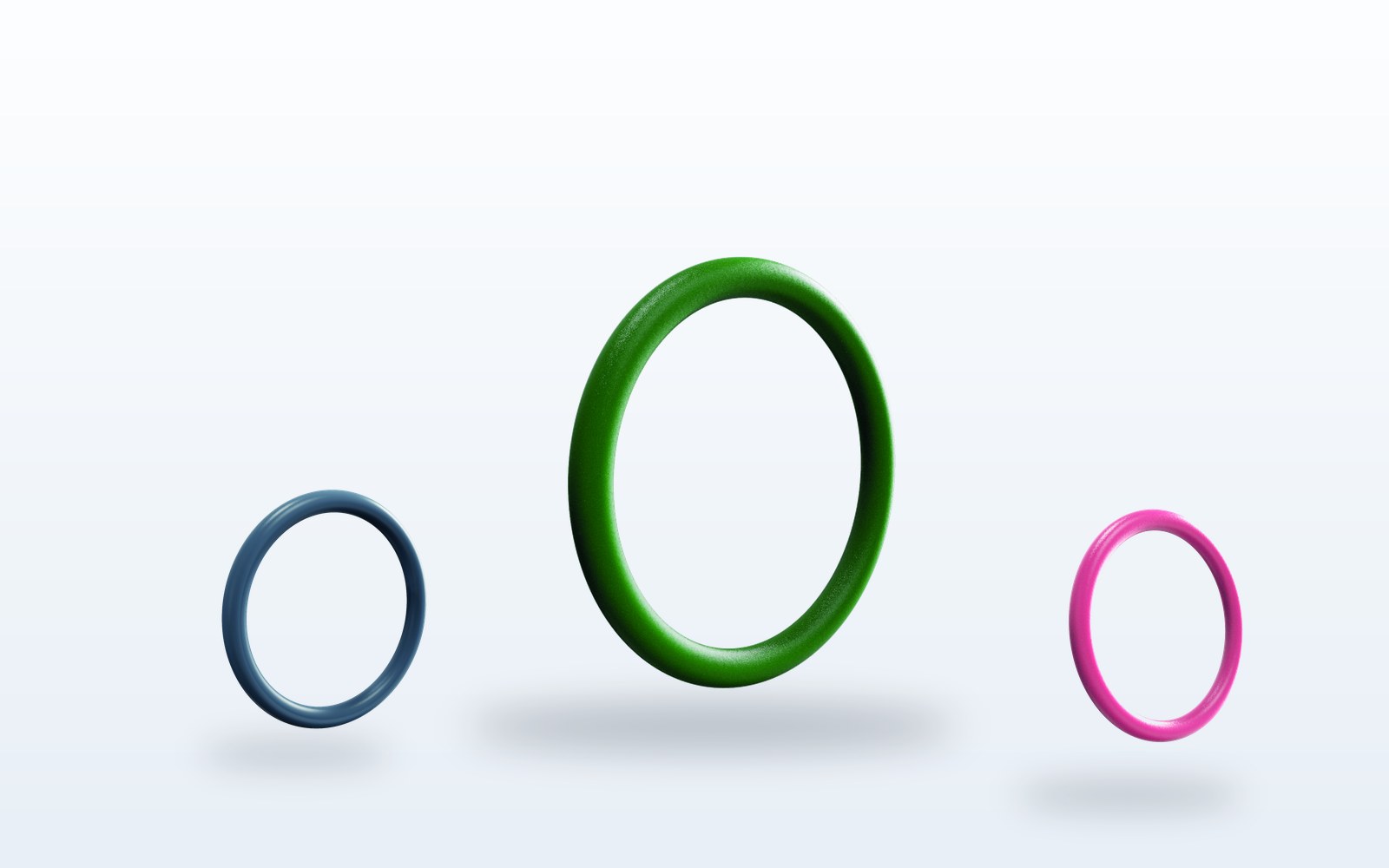
6% compression set keeps seating load stable across repeated open/close thermal cycling.
Low permanent deformation under plasma-process heat loads, with minimal outgassing risk.
Send us your media, temperature and pressure profile — we will recommend the grade.